
Key Words: Strategic studies, Military Strategy, Strategic Alignments, Sovereignty, Multipolarism.
Abstract: Stratetic Misalignment and the sovereignty consolidation effect.
When External Pressure Strengthens the Adversary
Strategic misalignment and the sovereignty consolidation effect
Recent tensions involving Iran illustrate a recurring paradox in international politics: external pressure intended to weaken a government can sometimes strengthen it.
This outcome is often interpreted primarily through political dynamics, but the deeper explanation lies in the misalignment between grand strategy, military strategy, and operational reality. When political objectives are formulated without a realistic understanding of the adversary’s history, culture, and strategic doctrine, the resulting strategy may produce the opposite of its intended effect.
Understanding this dynamic requires examining how strategy operates across different levels.
Grand Strategy and Political Assumptions
Grand strategy defines the political objectives of a state and the instruments used to pursue them: diplomatic, economic, informational, and military.
In the case of Iran, Western strategic thinking has frequently assumed that sustained external pressure — through sanctions, diplomatic isolation, and military threats — would exacerbate internal divisions and weaken the governing system. Iran’s political landscape contains genuine internal tensions, including economic grievances, factional rivalries, and debates about governance.
From the perspective of external actors, these divisions appear to create opportunities for pressure to accelerate political fragmentation.
Yet this assumption often overlooks a recurring pattern in political systems facing external coercion. When outside actors are perceived as attempting to shape domestic political outcomes, internal political competition can temporarily reorganise itself around a different issue: national sovereignty.
This phenomenon might be described as a sovereignty consolidation effect. External pressure compresses internal divisions by reframing political competition from debates about governance to a collective question about national autonomy.
Political actors who disagree about policy or leadership may still converge around the principle that decisions about national authority should remain internal. Internal disputes are not resolved, but they become temporarily secondary to the defence of sovereignty.
When grand strategy fails to anticipate this reaction, it begins from a flawed premise.
Military Strategy and Coercive Pressure
Military strategy translates political objectives into coercive leverage. If the underlying political assumption is that pressure will destabilise the adversary, then military signalling — force deployments, demonstrations of capability, or limited strikes — may be designed to intensify that pressure.
However, when external pressure triggers sovereignty consolidation rather than fragmentation, the military dimension can reinforce the adversary’s political mobilisation.
The confrontation becomes framed domestically not as a dispute between the government and its critics, but as a defence of national independence against external coercion. Under such conditions, governments gain strategic latitude to portray themselves as the defenders of national sovereignty.
The military instrument, intended to coerce, instead strengthens the adversary’s political legitimacy.
This dynamic is particularly visible in states with long historical experiences of external intervention, where narratives of resistance are deeply embedded in national identity.
Operational Reality and Strategic Miscalculation
At the operational level, misalignment between political assumptions and military realities can become even more pronounced.
Iran, for example, has spent decades developing a deterrence architecture designed specifically to withstand external pressure. This architecture includes long-range missile forces, asymmetric maritime capabilities in the Persian Gulf, distributed proxy networks across the region, and increasingly sophisticated air defence systems.
Rather than relying solely on conventional military parity, Iran’s strategy emphasises distributed deterrence — the ability to impose costs across multiple theatres and through indirect means.
Operational planning that assumes rapid coercion or limited escalation risks underestimating this architecture. Even limited military pressure can trigger responses that expand the conflict environment beyond the initial theatre of confrontation.
The result is a widening gap between political expectations and operational realities.
The Strategic Role of History and Culture
One of the most persistent sources of miscalculation in strategic planning is the underestimation of cultural and historical factors shaping national resilience.
Iran’s political identity is strongly influenced by historical narratives of external intervention, resistance, and sovereignty. These narratives are reinforced through political discourse, education, and institutional memory. As a result, external pressure is often interpreted not simply as a policy dispute but as a challenge to national autonomy.
In such contexts, collective identity can become a powerful mobilising force. Individuals who disagree strongly about domestic governance may still converge around the defence of national independence when they perceive external actors attempting to shape their country’s political future.
Strategic planners who focus narrowly on economic indicators or factional politics may underestimate how deeply such narratives influence public behaviour and political mobilisation.
Military strategy that ignores these factors risks misunderstanding both the adversary’s resilience and the limits of coercive pressure.
Strategic Dynamics in Africa
Variations of the same dynamic appear across Africa, where questions of sovereignty, security assistance, and external intervention frequently intersect with fragile political systems.
Somalia illustrates how external involvement can reshape domestic political dynamics in ways that outside actors do not always anticipate. The Somali state remains politically fragmented, with authority distributed between federal institutions, regional administrations, and a range of local power structures. International actors have been deeply involved in Somalia’s security environment for more than two decades through peacekeeping missions, counterterrorism operations, political mediation, and increasing competition among external powers seeking geostrategic influence in the Horn of Africa and along the Red Sea–Indian Ocean corridor.
From the perspective of external actors, these interventions are often designed to stabilise the security environment and strengthen state institutions. Yet within Somalia’s domestic political landscape, external involvement can sometimes trigger a different political reaction.
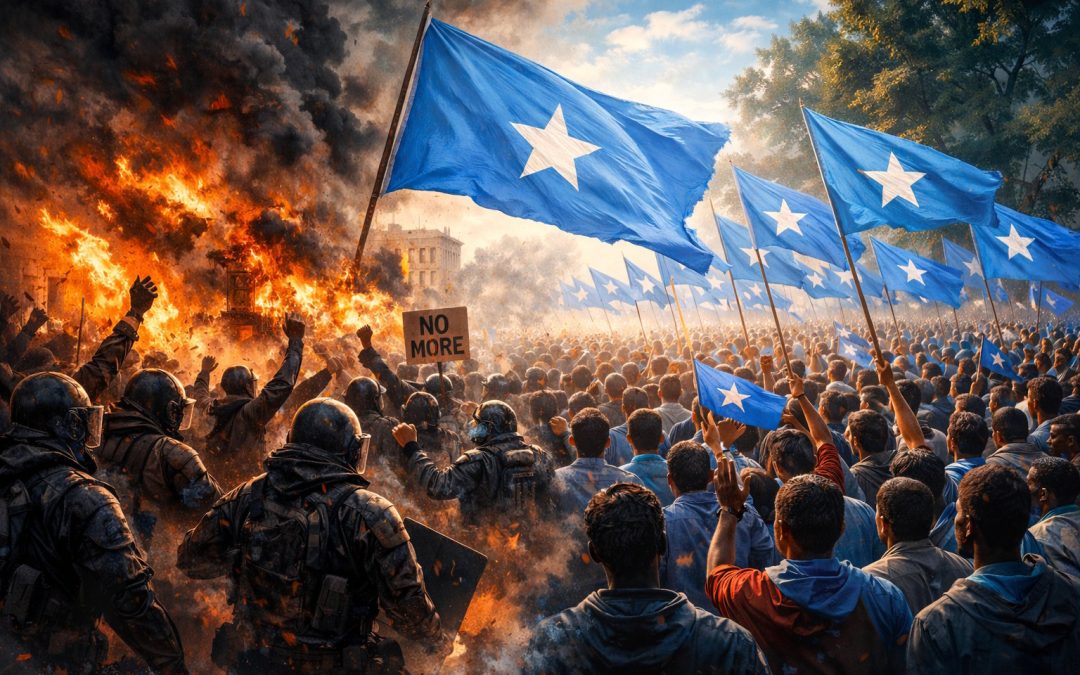
Debates surrounding Somaliland’s pursuit of international recognition provide one example. Moves by external actors that appear to advance Somaliland’s status can be interpreted within Somalia as challenges to national sovereignty and territorial integrity. In such moments, internal political competition within Somalia may temporarily reorganise itself around the defence of territorial unity.
Political actors who disagree on governance may still converge around the principle that decisions regarding Somalia’s territorial future should not be determined externally. External involvement intended to shape political outcomes can therefore compress internal divisions by reframing the debate around sovereignty.
The broader strategic pattern remains consistent. In fragile political systems, external intervention can unintentionally alter the internal balance of political competition by shifting the central question from governance to national autonomy.
Strategic Alignment
The lesson is not that external pressure never works, but that its effectiveness depends on alignment across the different levels of strategy.
Grand strategy must correctly understand the political dynamics of the targeted state. Military strategy must translate those political objectives into credible and proportionate coercive pressure. Operational planning must account for the adversary’s capabilities and strategic doctrine. And all of these must be informed by a deep understanding of the adversary’s history, culture, and collective identity.
When these levels fall out of alignment, pressure applied from outside may produce the opposite of its intended outcome.
Instead of weakening the targeted state, it can reinforce the strategic cohesion of the adversary.
Dr Joan Swart

Dr Joan Swart is a forensic psychologist and security analyst with an MBA and an MA in Military Studies. Her work focuses on African security, geopolitics, state fragility, substate dynamics, and the intersection between governance, legitimacy, and coercive power. She is the author of several books and regularly publishes long-form analysis and opinion pieces on security and governance issues. Her writing has appeared in outlets including DefenceWeb, Maroela Media, Netwerk24, RSG, Visegrad, and other policy and public-affairs platforms. Her work bridges academic research, policy analysis, and applied strategic assessment, and she is currently completing a second PhD at the University of Stellenbosch Military Academy.
*